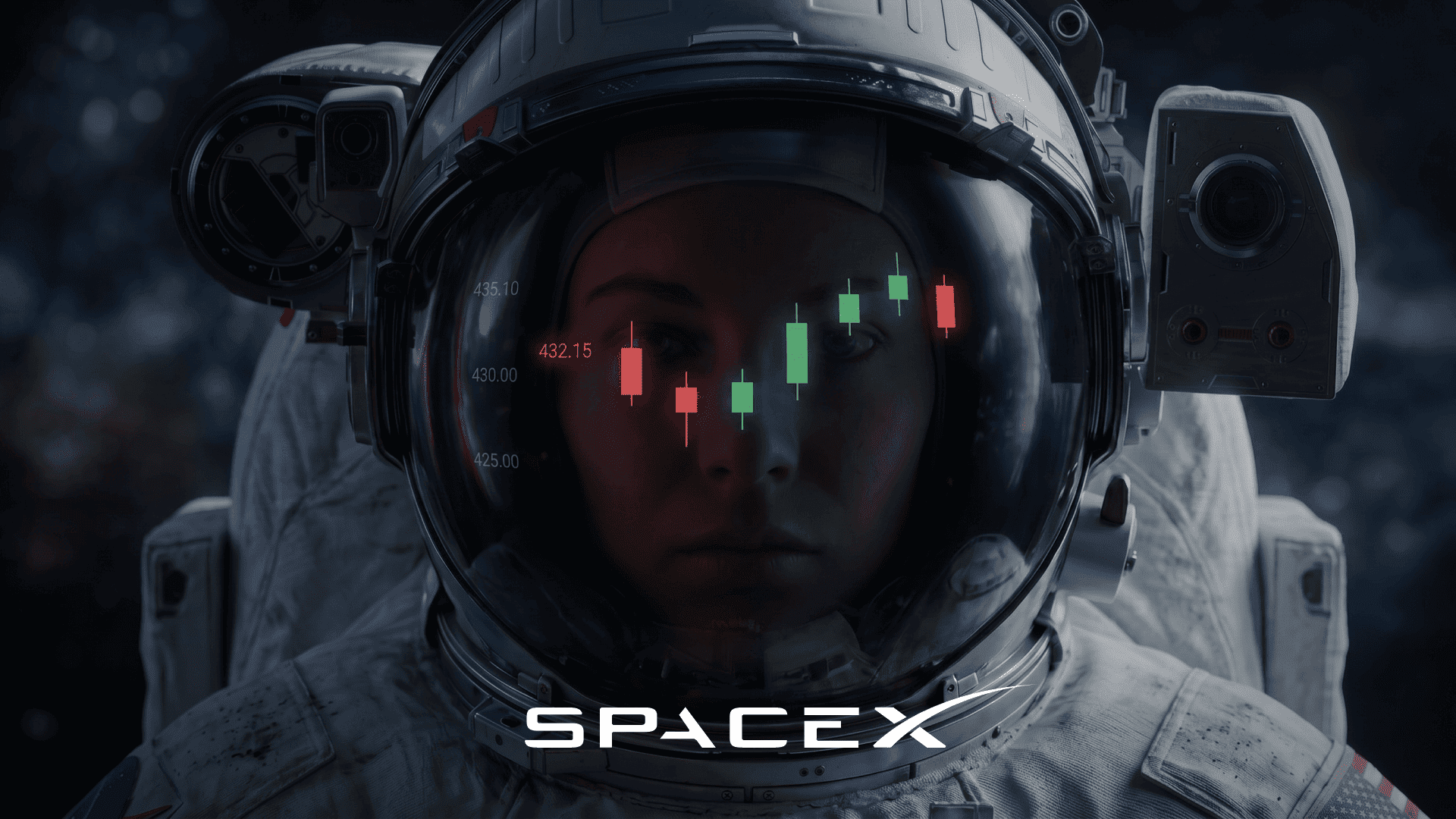
SpaceX completed the largest IPO offering in history in June 2026. Shares began trading on the Nasdaq on 12 June under the ticker SPCX after the company priced its IPO at $135 per share. SPCX opened its first trading session at $150 and closed at $160.95. The IPO valued SpaceX at approximately $1.77 trillion.
Key facts
- IPO date: 12 June 2026
- Ticker: SPCX
- Exchange: Nasdaq
- IPO price: $135 per share
- Opening price: $150
- First-day close: $160.95
- IPO valuation: approximately $1.77 trillion
SpaceX at a glance
| Founded | 2002 |
| Founder | Elon Musk |
| Headquarters | Starbase, Texas, USA |
| Full legal name | Space Exploration Technologies Corp. |
| Employees | 22,000+ |
| Starlink subscribers | ~12 million |
| Operational satellites | ~10,000 |
| 2025 revenue | $18.67 billion |
| Ticker | SPCX |
| Stock exchange | Nasdaq / Nasdaq Texas |
| IPO date | 12 June 2026 |
| IPO price | $135 |
| IPO valuation | ~$1.77 trillion |
| Nasdaq-100 listing date | 7 July 2026 |
What does SpaceX do?
SpaceX was founded by Elon Musk in 2002. It initially aimed to develop reusable rockets and has evolved into NASA's primary launch partner, conducting over half of all global orbital launches. Its principal services include rocket launch operations with the Falcon 9 and the Starship, the latter aimed at drastically reducing orbital costs. Falcon 9 has already achieved over a 95% cost reduction versus the Space Shuttle, with clients spanning NASA, the US Department of Defence, and private satellite operators.
Starlink
SpaceX’s satellite internet service Starlink is its main source of revenue. It serves around 12 million subscribers with approximately 10,000 satellites in low Earth orbit and generated $3.26 billion in Q1 2026, accounting for 69% of total revenue. In 2025, Starlink reported an operating profit of $1.19 billion and total income of $4.4 billion, marking it as SpaceX’s only profitable segment.
xAI and Grok
In February 2026, SpaceX merged with Musk’s AI startup xAI, which also acquired X (formerly Twitter). Plans are to integrate all AI initiatives under the SpaceX brand. The AI division currently represents the most significant financial losses for SpaceX, with xAI reporting $6.4 billion in losses for 2025, influenced by a 300% increase in R&D expenditures exceeding $5 billion.
xAI's Grok chatbot competes against major players such as ChatGPT and Gemini and has encountered difficulties in gaining market traction, coupled with legal challenges in the US and Europe regarding deepfake technologies.
Behind the scenes, the profitability of frontier AI applications remains uncertain due to substantial operational costs, a challenge amplified by the fact that Musk admitted Grok’s early infrastructure decisions were flawed, necessitating extensive rebuilding. Consequently, xAI poses the largest risk to earnings and SpaceX's valuation, with the company's long-term success hinging on whether the AI division can achieve commercial viability.
Anthropic deal and data centre business
Functioning as a landlord for data centres, SpaceX has made a deal with AI company Anthropic, which will pay $1.25 billion monthly until May 2029 for exclusive use of the Colossus 1 data centre in Memphis, originally designed for xAI. Anthropic is also exploring collaborations with SpaceX to develop extensive compute capabilities in space.
Orbital data centres
SpaceX also aims to deploy orbital data centres by 2028 and seeks FCC approval to launch up to one million satellites to create a space-based compute network, which could prove more cost-effective than ground-based systems.
How SpaceX makes money
| Segment | Q2 2026 revenue | Q2 2026 operating result |
| Connectivity (Starlink) | $4.29bn | +$1.66bn |
| Space | $962m | -$542m |
| AI | $2.56bn | -$1.26bn |
| Total | $7.81bn | -$143m |
SpaceX reported $7.81 billion in revenue for Q2 2026, up 92% year-on-year, while its net loss narrowed to $541 million from approximately $1 billion a year earlier. Connectivity remained the company's strongest operating segment, generating $1.66 billion in operating income, while the Space and AI segments recorded operating losses.
Following the IPO, SpaceX's balance sheet strengthened significantly. At the end of June 2026, the company reported approximately $93.5 billion in cash and cash equivalents, compared with $24.7 billion at the end of 2025. Total liabilities stood at approximately $65.5 billion.
SpaceX IPO: date, price and what happened
SpaceX completed its IPO in June 2026. Shares began trading on the Nasdaq on 12 June 2026 under the ticker SPCX, after the company priced the offering at $135 per share.
SPCX opened its first trading session at $150 and closed at $160.95. The IPO initially valued SpaceX at approximately $1.77 trillion. Following the full exercise of the underwriters' overallotment option, SpaceX sold approximately 638.9 million Class A shares and reported net proceeds of approximately $85.7 billion.
The offering became the largest IPO on record, surpassing previous major listings such as Saudi Aramco.
Who led the IPO?
Goldman Sachs served as the lead-left underwriter for the offering, with Morgan Stanley acting as co-lead and stabilisation agent. Bank of America, Citigroup and JPMorgan Chase were also among the lead banks in the broader underwriting syndicate.
Who controls SpaceX?
SpaceX operates under a dual-class share structure that gives insiders significantly greater voting influence than holders of publicly traded Class A shares. Class A shares carry one vote per share, while Class B shares carry ten votes per share.
Following the IPO, Elon Musk continued to hold a large majority of the company's voting power through his Class A and Class B holdings. SpaceX therefore remains a controlled company under Nasdaq corporate governance rules, meaning public shareholders have limited influence over matters such as the composition of the board and major corporate decisions.
Key shareholders
| Name | Role | IPO prospectus holdings |
| Elon Musk | CEO | 849.5m Class A + approximately 5.22bn Class B |
| Gwynne Shotwell | President & COO | 5.76m Class A + 7.11m Class B |
| Antonio Gracias | Board member / Valor Equity CEO | 503.4m Class A |
| Ira Ehrenpreis | Board member | 809,050 Class A + 564,650 Class B |
Musk's performance-based share awards
In January 2026, Musk was granted one billion performance-based restricted shares, contingent on SpaceX achieving a series of market-capitalisation milestones of up to $7.5 trillion and establishing a permanent human colony on Mars with at least one million inhabitants. A separate award of approximately 302 million shares is tied to additional valuation milestones and the development of non-Earth-based data centres capable of delivering 100 terawatts of compute per year.
The awards are also subject to employment and other conditions. Because Musk continues to control a large majority of SpaceX's voting power, holders of publicly traded Class A shares have comparatively limited influence over the company's governance.
What did the SpaceX IPO mean for Elon Musk?
Before the IPO, one of the major stories surrounding the listing was whether SpaceX's valuation could eventually make Elon Musk the world's first trillionaire.
The IPO established a public-market valuation for one of Musk's largest assets and increased the transparency around the value of his SpaceX holdings. However, estimates of his personal wealth remain highly sensitive to changes in the market value of SpaceX, Tesla and his other businesses.
Risks and controversies
Despite the scale of the IPO, exposure to SpaceX still carries significant risks. Investors and traders should consider factors including:
- Financial losses: SpaceX reported a net loss of $541 million in Q2 2026. Connectivity generated $1.66 billion in operating income, but the Space and AI segments recorded operating losses of $542 million and $1.26 billion respectively.
- High capital requirements: SpaceX continues to invest heavily in Starship, Starlink infrastructure and AI computing capacity. These projects require substantial ongoing expenditure and their future commercial returns remain uncertain.
- Operational and legal risks: Space launches, satellite networks and artificial intelligence products operate in technically complex and highly regulated environments, exposing the company to operational, regulatory and legal risks.
- Key-person and governance risk: Elon Musk retains substantial voting control over SpaceX. His decisions and public profile may therefore have an outsized influence on the company's strategy and investor sentiment.
Why this IPO matters
SpaceX's public offering became a major benchmark for the technology and space sectors. The listing gave public-market investors direct exposure to a company spanning launch services, satellite connectivity and artificial intelligence, while its record size demonstrated strong investor demand for large technology listings.
The IPO also brought greater financial transparency to SpaceX. As a publicly traded company, SpaceX now reports regular financial results, allowing investors to track areas such as Starlink subscriber growth, segment profitability, AI spending and investment in Starship more closely.
Ahead of the IPO, Axi Market Analyst Milan Cutkovic noted:
“SpaceX is preparing to go public in what would be the first IPO of a U.S. company with a market value exceeding one trillion dollars. The IPO will have a significant impact on the broader market, as it is expected to trigger large-scale systematic portfolio rebalancing and could benefit smaller stocks across the aerospace sector. The stock itself may benefit in the short term from the hype and the “Musk effect,” but concerns about its valuation are likely to come to the fore eventually."
3 steps to trade SpaceX CFDs with Axi
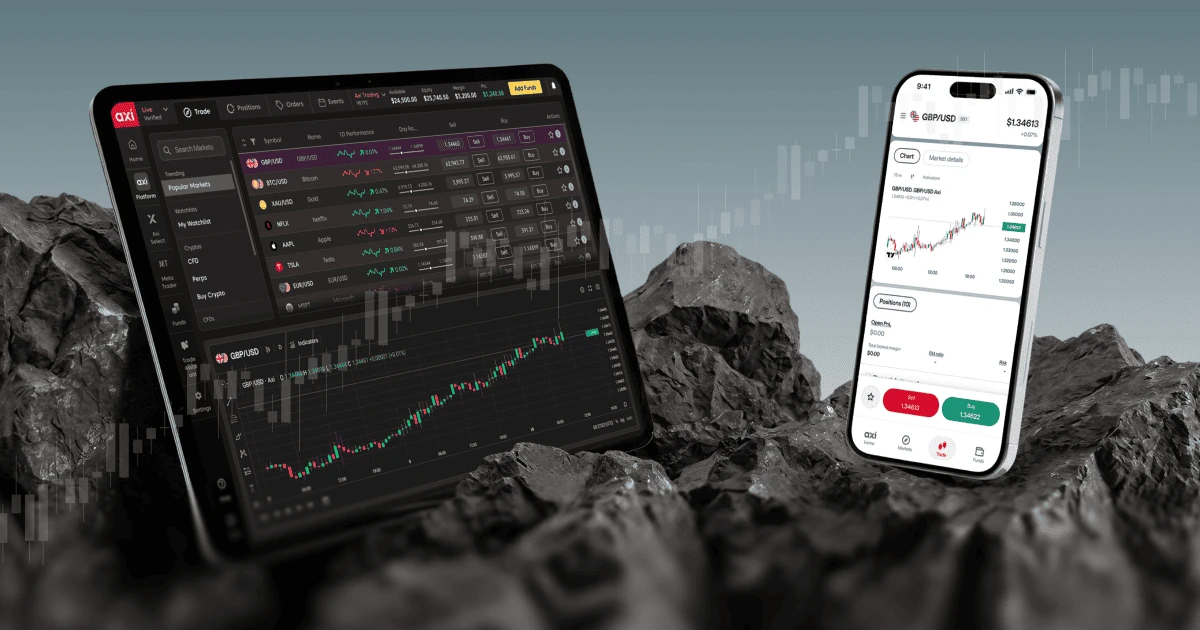
SpaceX is now publicly traded on Nasdaq under the ticker SPCX. Axi clients can trade SpaceX as a Shares CFD on MT5 and the Axi Trading Platform by searching for SpaceX or SPCX.US.
Currently, only long (buy) positions are available for SPCX on Axi, meaning short selling is not permitted.
- Log in to your live trading account, or open an account with Axi if you don't have one yet.
- Search for SpaceX or SPCX.US on the Axi Trading Platform or MT5.
- Choose your position size, set your stop-loss and take-profit orders if required, and enter the trade.
Trading CFDs carries a high risk of losing money rapidly due to leverage. You should consider whether you understand how CFDs work and whether you can afford to take the high risk of losing your money.
Sources
- Nasdaq: SpaceX launches historic IPO
- Nasdaq: SpaceX raises $85.7 billion through Nasdaq listing
- SpaceX: Q2 2026 financial results
- CNBC: SpaceX IPO Live Updates
- NBC News: SpaceX files S-1
Ready to trade your edge?
Join thousands of traders and trade CFDs on forex, shares, indices, and commodities!
This information is not to be construed as a recommendation; or an offer to buy or sell; or the solicitation of an offer to buy or sell any security, financial product, or instrument; or to participate in any trading strategy. It has been prepared without taking your objectives, financial situation and needs into account. Any references to past performance and forecasts are not reliable indicators of future results. Axi makes no representation and assumes no liability with regard to the accuracy and completeness of the content in this publication. Readers should seek their own advice.

Santiago Vazquez Munoz
I’m Santiago Vazquez Munoz, a global commercial leader with a career built across banking, financial services, fintech, sales and international growth.
Over the years, I’ve had the opportunity to build and lead businesses and teams across Europe, Latin America, APAC ,EMEA and other international markets. That experience has taught me that sustainable growth is rarely about one great idea. It comes from understanding markets, building the right teams, making disciplined decisions and, above all, executing consistently.
Today, my work sits at the intersection of global sales leadership, P&L management, commercial strategy, governance and business scaling. I’m particularly interested in what happens when strategy meets reality: entering new markets, leading multicultural teams, creating accountability, navigating change and turning ambitious growth plans into measurable results.
This blog is where I share some of those lessons, along with my perspective on leadership, international business, fintech, sales, execution and the realities of scaling organizations across countries and cultures.
I believe strongly in focus, leverage, accountability and execution. But I also believe leadership is a continuous learning process, and many of the most valuable lessons come from the decisions that didn’t work exactly as planned.
My goal here is simple: to share practical ideas oriented to age of AI in Trading, experiences and observations that may help other traders, leaders, entrepreneurs, and commercial teams think differently about growth and execute better